
CONTROLS MODERNIZATION
Why a PLC Replacement Is Rarely Just a PLC Replacement
A practical planning guide to the interfaces, testing and production decisions behind a controls modernization project.
Start with the production risk, not the replacement part.
An aging controller may trigger an upgrade discussion, but replacing it is not the complete project definition. The machine also depends on its I/O, operator interface, drives, networks, field devices and operating sequence. A proposal needs to explain which of these elements will stay, which will change and how the resulting system will be tested.
Start by identifying the business reason: unavailable spares, a recurring fault, lost program access, limited diagnostics or a planned production change. Record the evidence behind that concern. A modernization project should address a defined problem rather than assume that changing the controller will fix every equipment issue. Mechanical wear and process variation may require separate work.
Establish what is installed and what can be recovered.
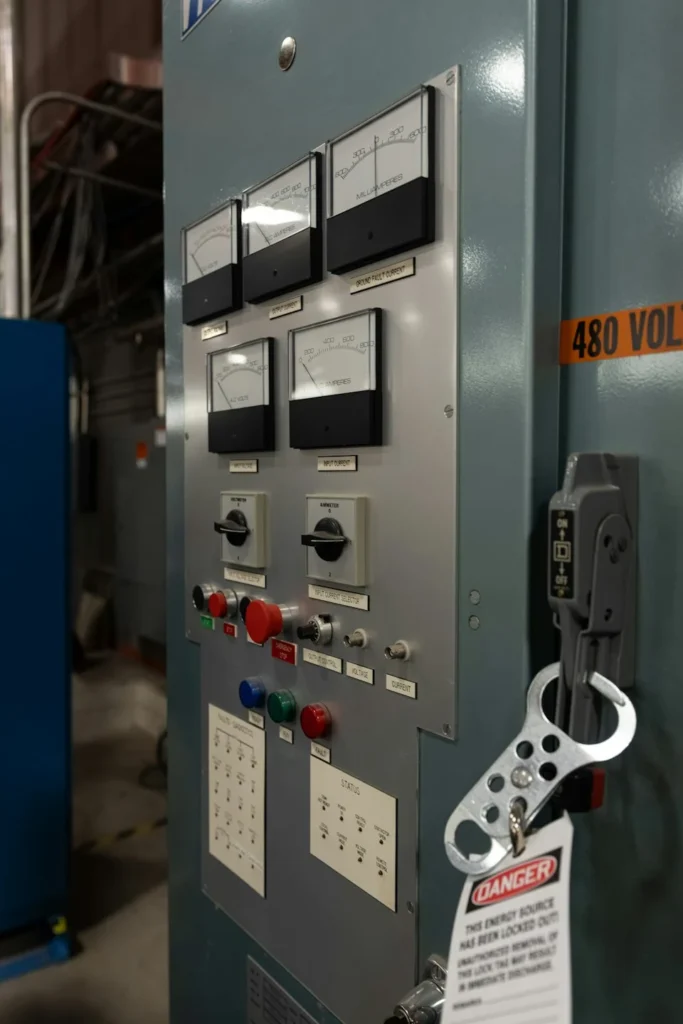
Build an inventory of the controller, I/O modules, network interfaces, HMI, drives and connected equipment. Record model and revision information where available. Compare the installed hardware with the drawings and identify differences. Photographs can help orient the review, but they do not replace an accurate circuit or I/O record.
Confirm access to native PLC and HMI projects, software versions, required licenses and device configurations. Establish whether the available files represent the running machine. An old project folder labeled “final” is not sufficient evidence. The review should identify missing sources, inaccessible devices and dependencies on a previous supplier before a shutdown is scheduled.
Keep original files separate from working copies. Record where each file came from and its relationship to the installed equipment. The PLC program handover guide provides a useful starting point for organizing that package.
Map the interfaces that cross the controller boundary.
A retained HMI may depend on addressing or communication behavior that changes with the new controller. A drive may require a different network interface. Another machine may expect a particular request, acknowledgment or fault response. These relationships deserve an explicit interface list.
For each connection, identify the owner, physical connection, exchanged information, expected timing and response to a lost connection. Review analog signals, scaling, special-purpose modules and motion interfaces against the actual application. Do not assume that a replacement with a similar catalog description behaves identically.
This interface review helps separate a controller migration from a broader machine controls retrofit. It also makes the estimate more useful: retained equipment can be distinguished from equipment that needs investigation or replacement.
Decide what behavior must stay and what should improve.
Describe the existing operating modes, sequence, recipes, alarms and recovery procedures. Ask operators and maintenance staff which conditions require workarounds. Separate confirmed problems from requests for new functionality. This creates a baseline against which the upgraded controls can be reviewed.
Program conversion may reduce some development work, but successful conversion does not establish that the machine behaves as required. Review the application logic, timing assumptions and interfaces on the target system. Identify the tests needed to demonstrate normal operation and the relevant abnormal conditions.
If improved diagnostics are part of the scope, define the information an operator or technician needs. For example, an alarm should help locate the unmet condition and explain the expected recovery action. Agree on the intended outcome rather than specifying only a new screen appearance.
Treat the shutdown window as an engineering constraint.
List the work that can be completed before the machine stops and the work that requires physical access during the shutdown. Identify purchasing, panel changes, field wiring, software preparation, test parts and personnel dependencies. A shutdown plan should include a realistic sequence for verification, not just installation.
Define decision points and responsibilities. Who authorizes the changeover? What conditions must be satisfied before energization and production release? If a rollback is feasible, document the hardware, files, time and equipment state it requires. Some physical changes cannot be reversed within the available window; establish that limitation before promising a fallback.
Changes affecting protective functions or access require an appropriate safety review and validation plan. Functional production testing is not a substitute for those activities. The responsible parties and required evidence should be included in the project scope.
Plan acceptance before committing to the implementation.
Create test cases from the agreed operating requirements. Include device checks, sequence operation, alarms, communication interruptions, recipe handling and recovery where relevant to the machine. Record which checks can be performed off the equipment and which require the installed system and actual process conditions.
For performance requirements, identify the product, setup, measurement period and acceptance method. Avoid comparing a best-case demonstration with a production baseline gathered under different conditions. If production improvement is not an agreed objective, do not imply that a controller replacement guarantees faster output.
A useful commissioning and acceptance plan assigns an owner to each check, records exceptions and defines who can release the equipment. It also connects the accepted software revision to the final documentation.
Prepare a focused first discussion.
An initial project review does not require a complete design. Bring the machine purpose, controller and HMI information, available software files, current drawings, known faults and target timing. Identify any production change expected during the same project. Mark unknowns clearly so investigation can be scoped.
Ask for deliverables that support the machine after startup: released native files, revision records, electrical updates, device configurations and agreed operator or maintenance instruction. The people who will support the machine should understand what changed and where the final information is stored.
MCT Nexus can discuss PLC migration planning alongside the electrical, HMI, integration and commissioning scope. Start with what the machine needs to keep doing, then define the changes and verification needed to support that outcome.
Related planning guides
Plan a factory acceptance test · Write equipment requirements · Organize machine documentation
Plan the upgrade around your machine.
Share the equipment, existing controls, production concern and available shutdown window.