CONTROLS & AUTOMATION
Industrial Automation Systems
PLC and HMI programming, motion, robotics, and equipment integration for new machines and existing production systems.
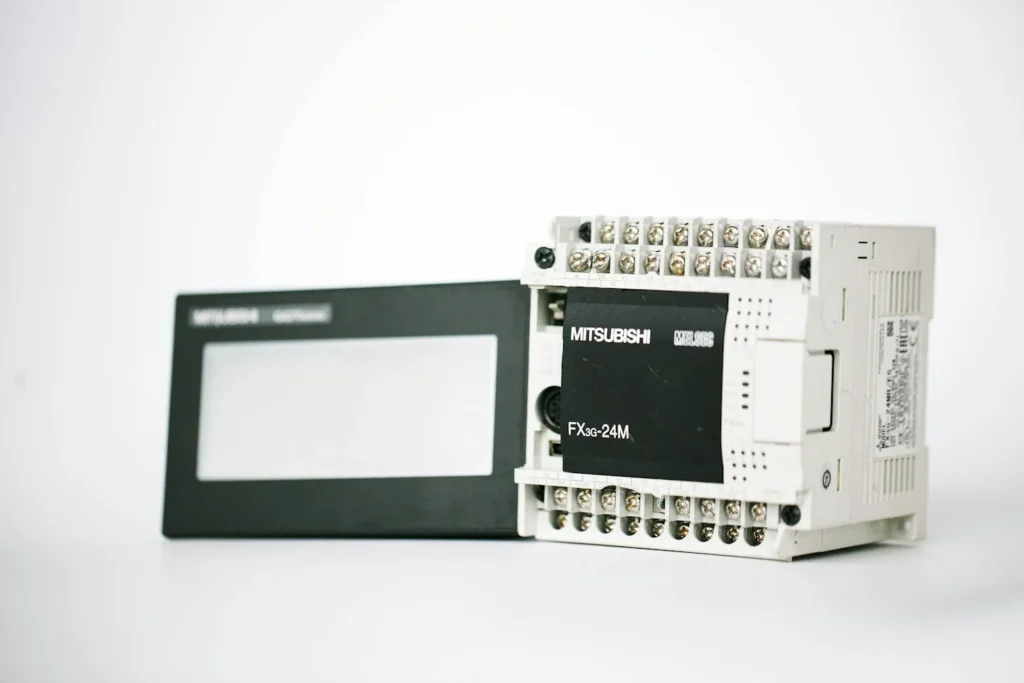
PLC & HMI PROGRAMMING
Clear sequences. Useful operator information.
Build machine behavior around a defined operating sequence, with operator screens and diagnostics that help your team understand what is happening.
- PLC sequences, interlocks, and operating modes
- HMI screens, alarms, and diagnostics
- Instrumentation and process data
- Software backups and technical documentation
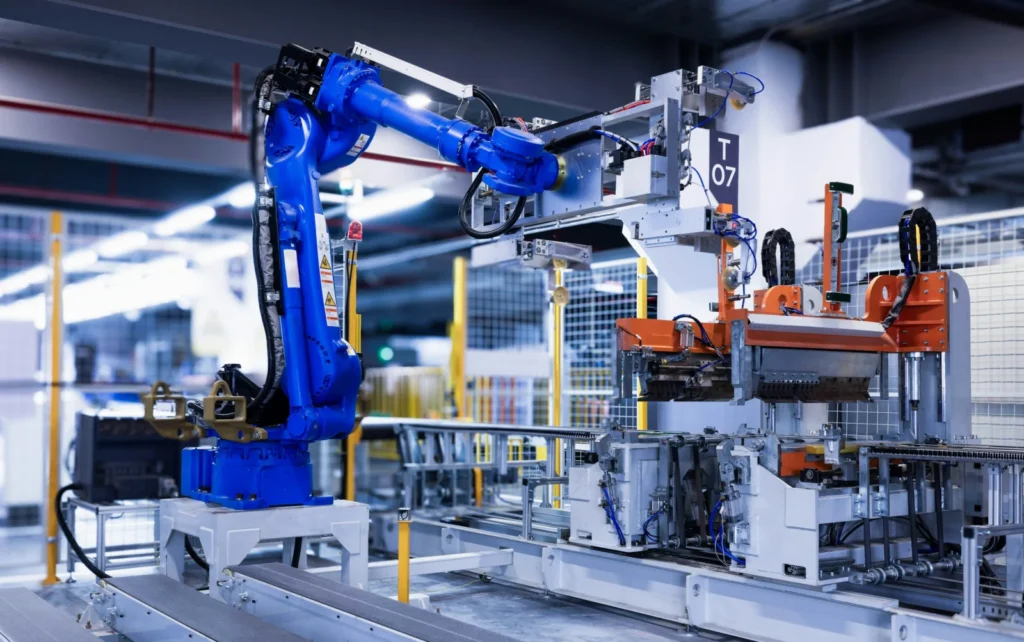
ROBOTICS & MATERIAL HANDLING
Coordinate the movement of parts.
Connect conveyors, robot cells, and handling equipment with the rest of the process. Define handshakes, part tracking, and machine interfaces early.
- Conveyor and workstation controls
- Robot-cell and pick-and-place integration
- Vision and barcode interfaces
- Mobile-robot station interfaces
EQUIPMENT INTEGRATION
From individual devices to an operating process.
Define the interfaces
Map signals, communications, responsibilities, and operating states between equipment.
Develop & connect
Coordinate PLC/HMI software, drives, instruments, and machine data around the required sequence.
Check & commission
Verify agreed functions, investigate faults, and prepare the software and documentation for handover.
Connect the process before choosing the hardware.
A line that stops between machines
Identify which machine owns each transfer, what proves the part has moved and how blocked, starved and interrupted conditions recover. A fast individual machine will not resolve an undefined interface.
A new requirement on existing equipment
Describe the change in product, sequence, quality checks or reporting. We review the installed controls, available documentation and equipment boundaries before proposing the integration scope.
An automation project that needs a clear start
Bring the process sequence, target cycle, current constraints, utilities and site location. We agree responsibilities for equipment, electrical work, software and verification before the build.
Continue with our conveyor and material-handling applications.
Connecting new or existing equipment?
Tell us about the machines, controls platforms, interfaces, and production challenge.
Connect equipment through a clear automation architecture.
Start with the process and the interfaces
Factory automation involves more than adding a controller. MCT Nexus reviews the work performed at each station, the movement of material, the operator’s responsibilities and the information exchanged between machines. We identify the conditions for starting, stopping, holding, releasing and recovering a process. The result is a defined integration scope that can be designed, programmed and tested.
An existing production line may already have several independent control systems. Integration does not automatically require replacing them. The first task is to understand what each system owns and what information the new automation needs. Interface definitions cover status, requests, acknowledgments, faults, timeouts and the response when communication is lost.
Choose a maintainable controls structure
The architecture connects PLC and HMI software, distributed I/O, instrumentation, drives and production equipment. Selection considers I/O quantities, communication interfaces, environmental requirements, machine complexity and the maintenance team’s installed base. Expansion needs and documentation standards are discussed early so the initial build does not prevent a later change.
The control system may coordinate discrete machine sequences, analog process feedback and motion. Each function needs an appropriate control approach. A positioning axis has different requirements from a continuously running conveyor or a process pump. We review these distinctions through the motion and drives and sensors and instrumentation scopes.
Make production information useful
An HMI should communicate machine status, active faults, permissives and authorized operating adjustments. Alarm text should identify the condition and support a useful next action. Where data collection is included, define the source of each value, its units, timestamp, equipment identity and intended use. A display of numbers is not the same as a reliable production record.
Recipe management needs similar care. Define which settings can change, who can change them and how the selected recipe is confirmed at the machine. Interfaces to business or production systems are separately scoped, including ownership of servers, databases, networking and long-term administration.
Coordinate robots, conveyors and process equipment
- Robotic cells exchange ready, busy, complete and fault states with the surrounding machine.
- Material handling coordinates release conditions, accumulation and destination availability.
- Filling and dispensing connects valves, pumps, measurement and process verification.
- Inspection and testing ties the result to the correct part and disposition.
The interfaces are verified under normal cycles and expected disturbances. A missed sensor, unavailable downstream station or interrupted cycle should have a defined response. Changes that affect machine hazards also require review of the protective measures and validation responsibilities.
Industrial networks and startup
The network design documents devices, addresses, communication paths and ownership of plant connections. Diagnostics should help separate a failed device from a cabling, configuration or application problem. Network protocols and remote access requirements are confirmed against the installed equipment and the plant’s IT/OT policies.
Commissioning progresses from electrical and I/O checks to equipment-level functions, coordinated sequences and representative production testing. MCT Nexus works with the customer to define test conditions, acceptance evidence and the handover package. Site work is planned around access, utilities, production windows and the people needed to verify the process.
New automation or improvement to an existing line?
For a new project, begin with the process, performance requirements and interfaces. For an existing machine, send the current controls platform, drawings, symptoms or desired changes and the available shutdown window. A machine retrofit may preserve suitable mechanics while updating the control system; feasibility depends on the condition and requirements of the equipment.