
MCT Nexus SERVICE
Assembly Automation & Production Equipment
Assembly automation that coordinates part handling, process steps, verification and operator interaction in a defined production sequence.
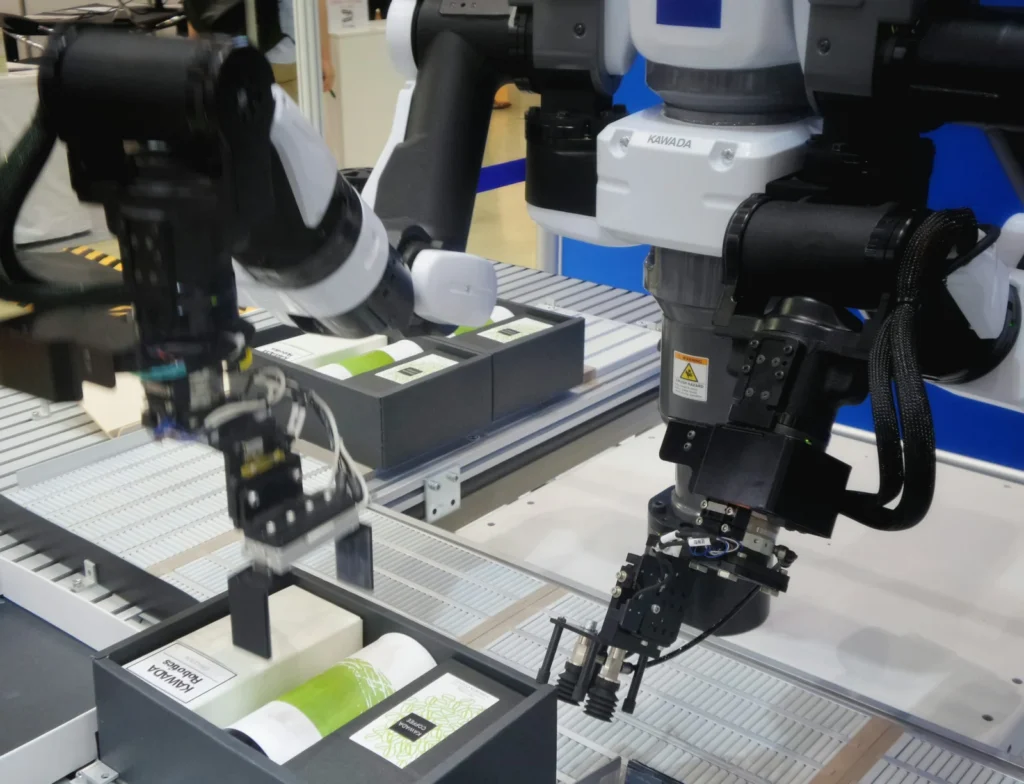
Develop the assembly sequence around the part.
An assembly station needs to do more than repeat an actuator movement. It must present the correct parts, confirm the conditions for assembly, perform the operation and determine whether the result can move forward. MCT Nexus develops the machine controls and integration scope around that sequence.
The starting point is the product and its variation: part drawings, incoming condition, orientation, assembly features and the quality characteristic being checked. Operator tasks, replenishment, fixture changes and reject handling are part of the machine requirement. These activities can determine practical throughput as much as the automatic cycle.
Coordinate the production operations.
Handling and presentation
Review how parts arrive, how they are located and what confirms their presence and orientation. Feeding, transfers, indexing and operator loading must be considered with the fixture and tooling. A part-present signal alone may not establish that the correct part is loaded in the correct position.
Fastening and press operations
Where a fastening tool, press or other process device is used, define the command, ready state, result information and fault response. The specialist device and tooling must be suitable for the process. MCT Nexus’s integration scope connects those functions to the machine sequence and operator information; process capability and acceptance limits must be established for the application.
Inspection and error proofing
Identify the errors that the station is intended to detect. Part presence, orientation, completion and a measured quality characteristic are different checks. Define how a failed check affects the part, the machine and the production record. Link these requirements with inspection and testing and traceability where needed.
Control the cycle and the interrupted cycle.
The PLC/HMI program should make the active station state and waiting conditions understandable. A stopped cycle may leave a part partly assembled, a fixture occupied or a process result unavailable. Define whether the station can resume, must repeat a check or needs a controlled unload and reject procedure.
Product changeover also needs an explicit process. Confirm the selected recipe, required tooling and permitted setting ranges. Identify which adjustments are available to an operator and which require engineering authorization. Changes to a process limit should not silently invalidate the acceptance requirement.
Machine access, guarding, tooling hazards and maintenance activities are reviewed with the overall equipment design. The project defines the applicable protective measures and validation responsibilities. MCT Nexus does not assume that a normal-cycle interlock is an adequate protective function.
Verify the station with representative production conditions.
Testing should use an agreed sample set and a documented acceptance plan. Review normal parts, expected variation, known defects, interrupted cycles, changeover and recovery conditions. A demonstration with a single ideal part cannot establish that the complete operating range is ready for production.
The FAT records the conditions tested and any exceptions. Site commissioning checks the installed utilities, line interfaces and operator workflow. The handover can include drawings, software, process settings within scope and the instructions needed to identify a fault and follow the agreed recovery procedure.
What information should we provide?
Send part drawings, assembly steps, target production rate, product variants, proposed tooling and the quality checks required. Include existing equipment that must be retained and the responsibility for process trials. MCT Nexus can then discuss a custom machine, a station controls package or integration with an existing line.
Can an existing assembly station be automated further?
Potentially. Review mechanical condition, access, tooling, controls and the desired operating change before defining the project. Some improvements can use the existing machine; others require changes to fixturing, handling or protective design.
Discuss your project with MCT Nexus.
Share the equipment, production requirement and target timing. We will review the scope, interfaces and next steps with your team.