MCT Nexus SERVICE
Industrial Controls Engineering Services
MCT Nexus develops industrial control systems that connect machine sequences, PLC software, operator interfaces, motion, sensors and electrical design.
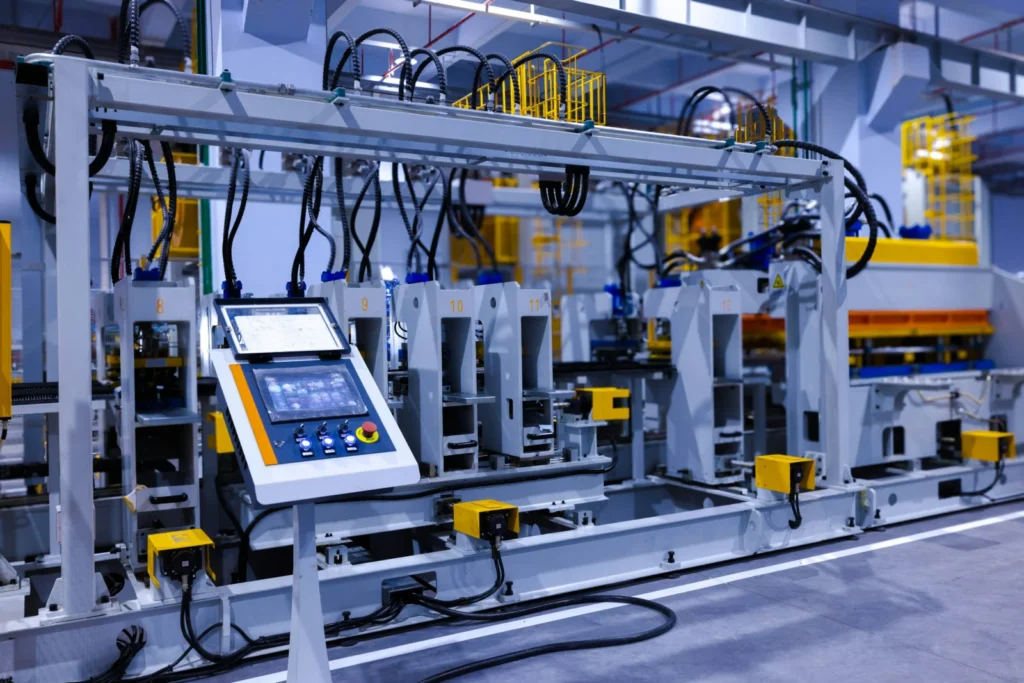
Controls engineering starts with the machine sequence.
A controller cannot resolve an undefined process. We begin with what the machine must accomplish, the conditions required for each operation and the equipment that owns each action. The engineering scope translates those requirements into control architecture, electrical interfaces, software and verification activities.
An OEM may need the controls package for a new machine. A plant may need a subsystem integrated with existing equipment. A production team may need recurring faults investigated before a change is designed. MCT Nexus defines the deliverables around that responsibility rather than treating every request as a programming-only task.
Define the architecture and the boundaries.
Hardware and electrical interfaces
Review controller requirements, I/O, devices, drives, control power and network connections. Identify the source and destination of every interface and the requirements for the electrical drawings and control panel. Customer standards, serviceability and the installed controls base influence the design.
Sequence and equipment ownership
Establish which controller owns each actuator, recipe, transfer and production decision. An interface should define commands, status, completion, faults and timeout behavior. This is especially important when an OEM machine, robot or plant system remains under another supplier’s control.
Operator and maintenance information
Define the machine states, active-step information, permissive displays, alarms and maintenance diagnostics. The information should help a person understand why the equipment is waiting or stopped. HMI navigation and terminology should match the machine rather than expose internal program tag names.
Develop the controls package.
MCT Nexus’s scope can combine PLC/HMI programming, electrical design, motion interfaces, sensors and instrumentation, network configuration and integration testing. Work packages identify inputs, deliverables, review points and acceptance conditions. That approach gives the customer a clear way to review progress before equipment startup.
Motion requirements may involve speed control, positioning or coordinated operation. Instrumentation may provide a discrete condition or analog process feedback. The engineering task is to define the required behavior and select the appropriate interface; the same programming pattern is not suitable for every device or process.
For an existing system, the initial review also considers software access, backups, documentation quality and the state of the physical equipment. Undocumented field changes can affect what is feasible. A short assessment may be needed before a reliable implementation scope or shutdown duration can be established.
Review abnormal operation and recovery.
Controls engineering includes the conditions outside a normal production cycle. Consider a missing part, failed sensor, unavailable downstream station, lost communication or an interrupted process. Establish whether the equipment should wait, stop, reject, require operator confirmation or follow a defined recovery sequence.
Protective functions and machine hazards are reviewed separately from ordinary process permissives. Safety requirements, applicable standards, hardware arrangements and validation responsibilities are established for the particular machine. Changes to a sequence or motion interface may also change how operators interact with the equipment and therefore need review.
Testing should connect a requirement to an observable result. During FAT and commissioning, record the relevant machine state, input conditions, expected response, observed response and any open action. A successful dry cycle does not by itself demonstrate production capability with all intended products.
Make the system maintainable after handover.
The final controls package should identify the delivered software revision, device configurations, electrical drawings, network information and outstanding limitations. Operator and maintenance familiarization should focus on the installed equipment, fault interpretation and agreed recovery procedures. MCT Nexus can include documentation and training in the project scope.
For OEMs, repeatability matters across future machines. Discuss naming conventions, standard functions, customer-specific options and how revisions are carried into the next build. For plants, discuss the maintenance team’s existing tools and the ownership of backups. Both approaches benefit from clear boundaries between the machine supplier, plant engineering, IT/OT and external service providers.
Start with the equipment and the responsibility.
Send the process description, existing or preferred controls platform, machine interfaces, available drawings and the target schedule. Identify whether you need design, programming, panel build, integration, commissioning or a combination. For changes to operating equipment, include production constraints and the planned shutdown window.
Can MCT Nexus work with an existing engineering team?
Yes. A defined scope can be delivered alongside an OEM, mechanical designer, panel builder or plant engineering team. The project should identify interface owners and approval points so the responsibilities remain clear.
Is this only contract programming?
No. Programming is one part of the controls engineering scope. MCT Nexus also connects the electrical package, devices, equipment interfaces, testing and handover needed to make that software useful on a real machine.
Define the engineering responsibility.
For an OEM machine builder
Identify the deliverables your machine team owns and those assigned to MCT Nexus: control narrative, drawings, panel scope, software, FAT and startup support. Use the same interface list across disciplines.
For an operating plant
Start with the production problem and the boundary of the affected equipment. Include normal operation, fault recovery, maintenance access and the shutdown window in the review.
For an integration project
Record commands, status, faults, timeouts and handover points between systems. Review those interfaces with each supplier before wiring or software work makes the assumptions difficult to change.
Continue with our commissioning and FAT planning.
Discuss your project with MCT Nexus.
Share the equipment, production requirement and target timing. We will review the scope, interfaces and next steps with your team.